In Salò, the Museo del Nastro Azzurro tells two centuries of local history
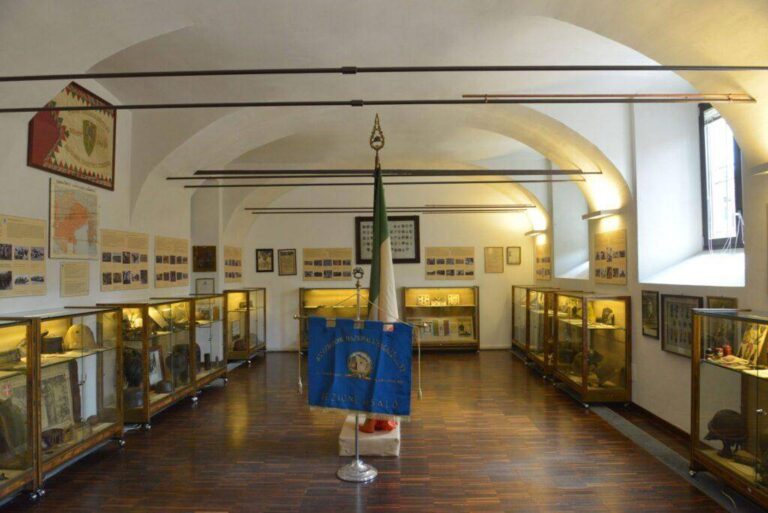
The Museo del Nastro Azzurro at MuSa in Salò preserves artefacts and documents relating to the area’s military history between 1796 and 1961.
The Museo del Nastro Azzurro in Salò, housed in the former Santa Giustina monastery complex at MuSa, preserves artefacts, documents and memories connected with around two centuries of the area’s social and military history. The collection covers the period from 1796 to 1961, from Napoleon’s arrival through the Italian Wars of Independence and the two world wars. It follows the stories of recipients of military valour awards and of the communities around Salò.
The origins of Salò’s collection date back to 1934, when the local group of the Istituto del Nastro Azzurro was established by several recipients of awards for valour, including Adolfo Battisti, a doctor and former Alpini officer, and printer Luigi Ebranati, a former Bersaglieri non-commissioned officer. The two men began assembling material on local battles and protagonists. After Battisti died in 1942, Ebranati continued the work for forty years, dedicating it to the decorated soldiers, the fallen and his departed friend.
In 1949, Salò’s museum and shrine was named after Battisti. A decisive development came in 1976 with the creation of the Fondazione Museo Storico del Nastro Azzurro, recognised as a legal entity in 1981 by President of the Republic Sandro Pertini and still responsible for managing the collections.
The exhibition brings together weapons, uniforms, insignia, badges, publications, memorial plaques and sculptures, along with documents and propaganda posters. The material covers three main themes: the stories of military valour award recipients, the wartime events that affected the Salò area, and the forms of propaganda used in different periods. According to MuSa, this section is unique in Italy. It complements the other collections housed in the Santa Giustina complex and presents a heritage built over time around the town’s civic and historical memory.